
Someone Who Couldn't Code Shipped an App in 3 Hours with AI — Are Developers Finished?
Notes from a workshop where people who'd never coded shipped an app in three hours with AI — and why developers need to go deeper, not disappear.
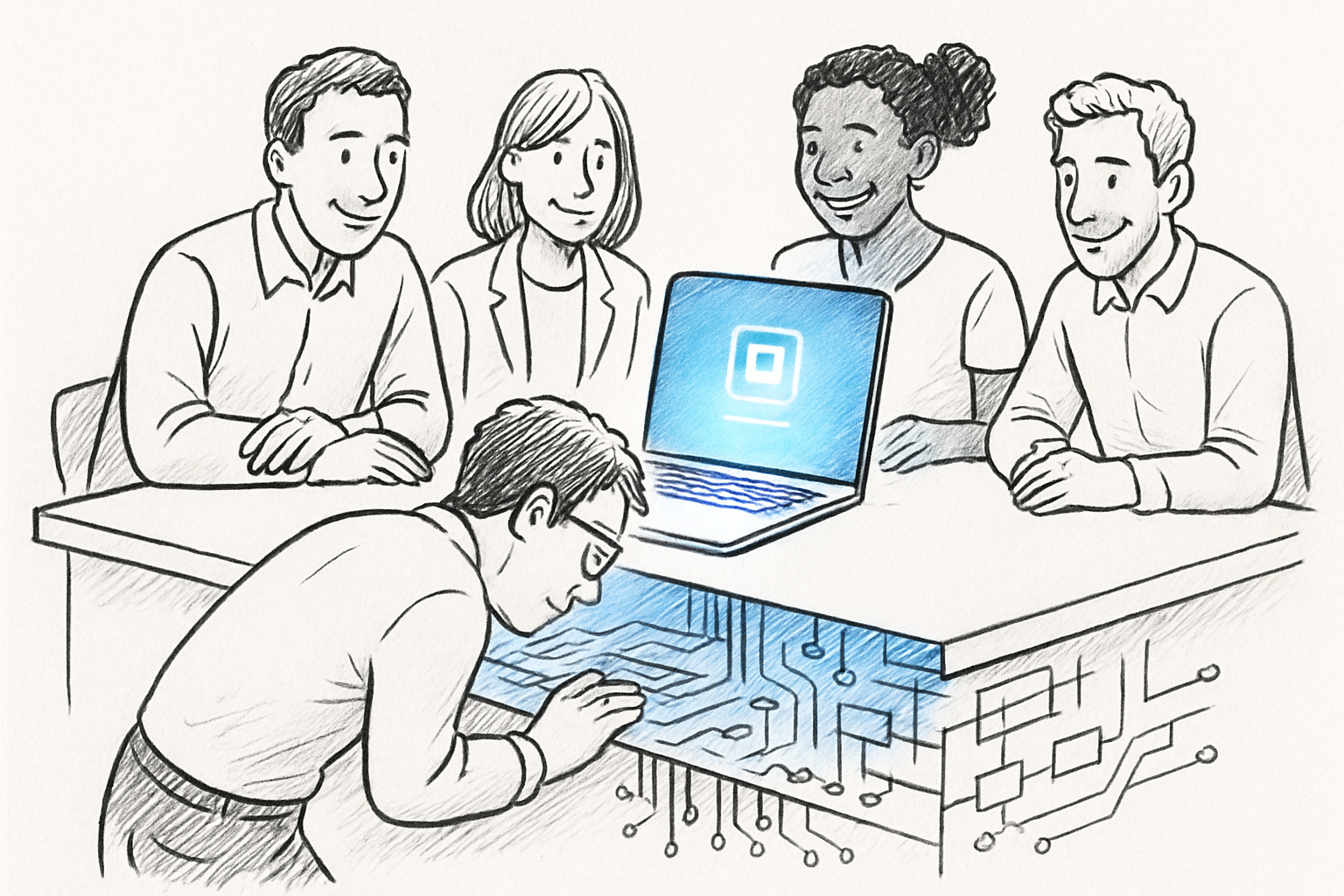
Yesterday, someone who couldn't code shipped an app
Yesterday I ran an AI coding workshop. There were three people in the room.
One was in her mid-twenties — four years in operations, one year in development. She could code, but she'd never built anything with AI. The second, in her late twenties, worked at a gym and told me plainly, "I've only ever used ChatGPT." The third was a man in his sixties, deep into stock investing, who couldn't write a single line of code but showed up with the most meticulous requirements spec in the room.
Three hours, one morning. Here's what happened.
The junior developer installed Claude Code, set up a Flutter environment, wired it to Supabase, and got a real app running on screen — her first time doing AI-assisted development. The woman from the gym — the one who only knew ChatGPT — took the spec the older man had brought, built a stock dashboard, and pushed it to GitHub. By lunch. The man in his sixties had no laptop, so he never touched a keyboard; instead he kept firing off business ideas and asking which direction to take.
Three hours. In three hours, people who knew nothing about development put something they'd built with their own hands onto the internet.
For a moment, I feared for developers and designers
Honestly, watching it was both wonderful and frightening.
It wasn't the first time. At a previous company I once set up an AI dev environment for a designer who couldn't code at all, and taught her how to use it. Not long after, she took over the web and Flutter front-end work I used to do. I'd handed off my own job by teaching it. (Painful and funny at once.)
AI has torn down the barrier to entry. The line between "people who can build" and "people who can't" is blurring. Of course developers and designers feel a flash of anxiety.
But there's something AI still can't do
If the story ended there, it'd just be a scary one. But there's a limit you can see clearly on the ground.
When you keep saying "next, next" to an AI, the thing does get built. The problem is that it's often hollow. The result is unmistakably yours, but how it was made and why it behaves the way it does never gets resolved.
For most people that doesn't matter — if the app runs, it runs. But for a junior developer, this is an existential threat. "If the AI writes all of it, then what am I?"
So my conclusion goes the other way. Developers have to go deeper. The more code AI spits out, the more valuable the person who understands why that code works becomes. Computer architecture, system design — the very fundamentals everyone says you "don't need anymore" are the only moat that keeps a developer a developer in the AI era.
The interesting part: yesterday I borrowed from my own experience to explain computer architecture to the beginners in the simplest terms — and every one of them went "oh, that's why it works this way." The hollow center was quietly filling in.
The most important thing in the workshop wasn't the tool
The internet is flooded with AI courses. Most of them are "click this button, type this prompt." But over three hours, the questions that came up most weren't about tools.
"How should I ask the AI this?" "Is this the right direction?" "What do I need to decide here?"
What actually needs teaching is how to steer a project in conversation with AI, and the posture of asking and working through problems when you're stuck — not "do this, do that." And that only transfers when a person is right there, in the room, clearing away the fog that lives outside the tool.
So
AI doesn't erase developers. It threatens shallow developers, and it hands non-developers a weapon.
Between those two shifts, the role of teaching became clear. Tool tutorials are on YouTube. What's actually needed is helping people set a direction for working with AI, and showing them where human judgment has to sit. Generation is the AI's job; judgment, verification, and responsibility are still ours.
Yesterday, the faces of three people who shipped an app in three hours looked good. And standing beside them, eighteen years into this craft, I confirmed it again: our work isn't disappearing. It's getting deeper.
Get notified of new posts
We'll email you when a new blog post is published.