
Why Development Timelines Always Slip — It's Structural, Not a Lie
Development schedules slip constantly. Not because developers are lazy or dishonest. Here's the actual structural reason — and how to manage it.
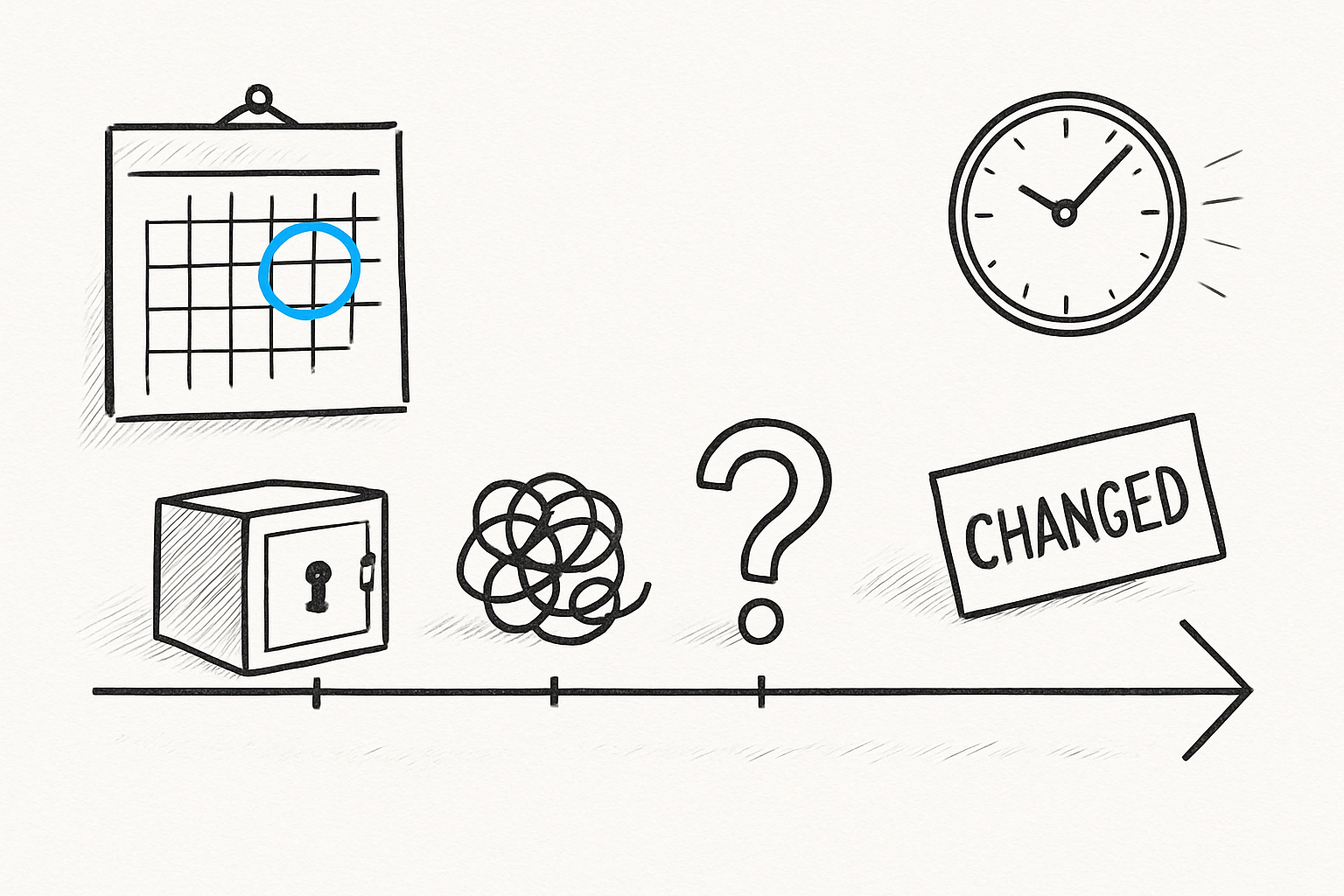
"You said this would be done this week."
I've heard that sentence more times than I can count in 18 years. And honestly, I've missed that promise more times than I'd like to admit.
It's Not Laziness
When a development schedule slips, people usually assume one of two things: the developer is lazy, or they lied about the estimate from the start.
Neither is usually true. The real reason is structural.
You Don't Know What You Don't Know Yet
A quote gets made at the start of a project. That estimate is calculated with whatever information exists at that moment.
The problem: some things only become visible once development actually starts.
- "This external API doesn't behave the way its docs describe."
- "This feature conflicts with the existing login structure."
- "This data format isn't what we assumed."
None of this is knowable before writing the code. If it were, it would've been in the estimate.
Requirements Don't Stay Fixed
Another reason: requirements change mid-project.
"Can you just add one more thing" adds up, and the schedule slips. This isn't really anyone's fault. It's normal to only realize "this needs to work differently" once you actually see the screen. Some decisions can't be made without a prototype in front of you.
But each of these small changes stacks. And the original schedule stops being valid.
The Last 10% Eats 90% of the Time
There's a big gap between a feature "looking like it works" and a feature "actually being usable."
Getting a screen to appear and a button to click is fast. Error handling, edge cases, testing with real data, performance checks — that last stretch takes far longer than it looks like it should. From the outside it looks "almost done." In reality, it's often less than half finished.
What Actually Helps
You can't eliminate schedule slippage. You can manage it.
Build in slack from the start. A schedule built on the best-case scenario is always late. Room for the unknown has to be in the estimate from day one.
Show real progress along the way. Waiting until everything's done to show it means all the problems surface at once, too. Frequent check-ins on actual output catch wrong turns early.
Treat requirement changes as schedule changes. Agree upfront that "just one more thing" comes with a schedule adjustment. Otherwise you end up having the same "why is this late" conversation over and over.
This doesn't mean delays are fine. But knowing the cause is structural — not laziness or dishonesty — changes how you respond to it. Build in slack, check in often, and treat scope changes as schedule changes. That's what makes a timeline manageable instead of just hopeful.
Get notified of new posts
We'll email you when a new blog post is published.