
What to Decide in Three Weeks Before Bringing AI Into Your Company
Most companies know they should use AI but haven't decided where to start. Here is what MVPIT's AI Advisory looks at, decides, and leaves behind over three weeks.
Most companies now know they should be using AI. Where they get stuck is the next step. What should change first, and what should stay as it is? Without an answer, the number of tools grows while the way work gets done stays the same.
MVPIT's AI Advisory works out that order together with the company over three weeks. It starts with how the company works today, before picking any tools.
Every company starts from a different place
The advisory splits into two tracks.
Companies with a development team take the development track. They bought AI coding tools and only some people use them, or development got faster and they aren't sure the quality is holding up. In this track we look at repositories, deployment, and code review, and design where AI fits, the rules it follows, and the security settings around it.
Companies without a development team take the operations track. There is work people repeat by hand every day, nobody is sure what to automate first, and there is no one inside who can look at the technology and make the call. In this track we look at workflows and repetitive tasks, and decide for each one whether to use an existing tool, bring in a SaaS product, or build something new.
If both apply, the two tracks run together under one contract.
How the three weeks go
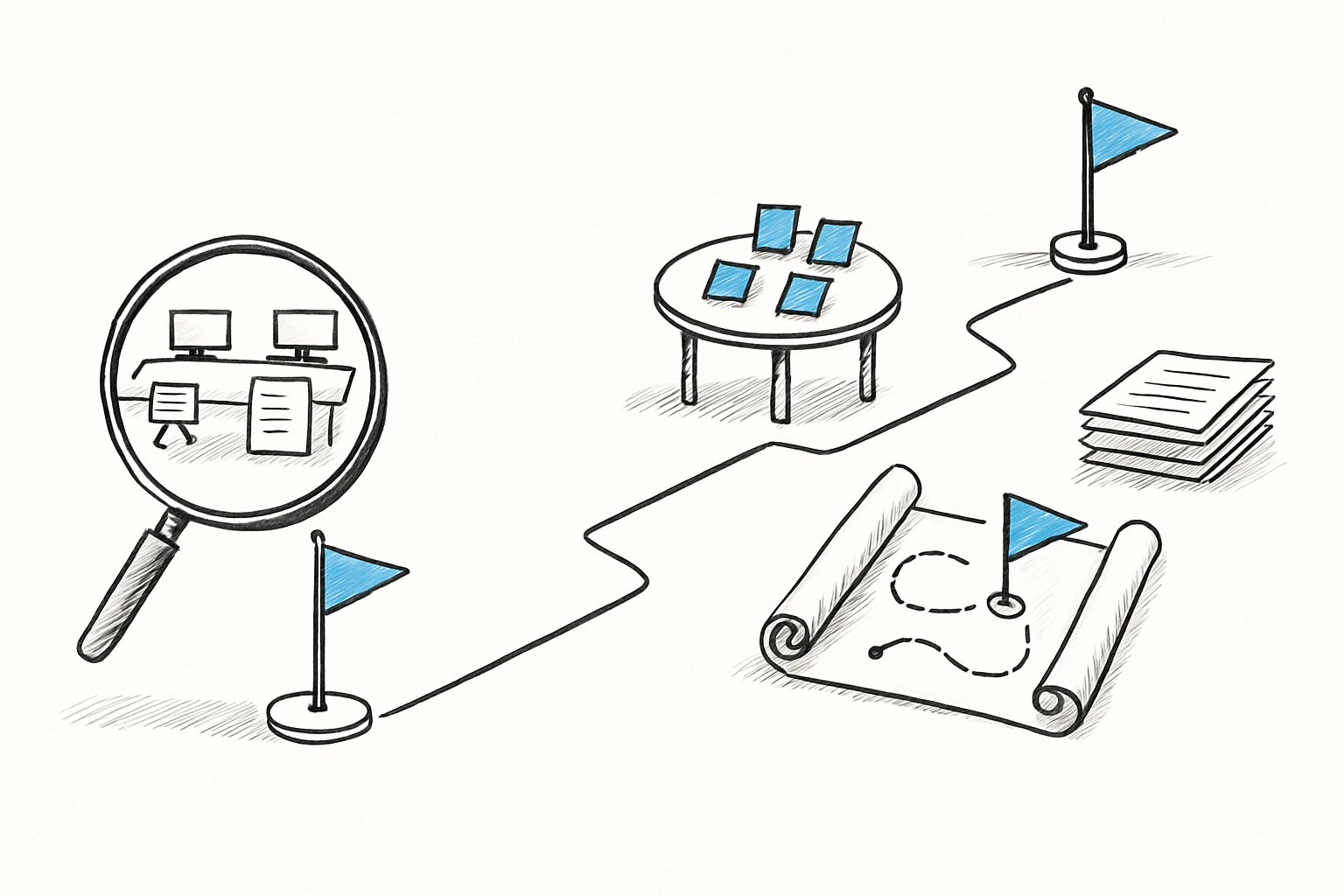
Week one finds what to change. We visit the company, listen to the people doing the work, and watch how it gets done. We list the tasks where AI is worth using, rank them, and write them up in a current state assessment.
Week two decides how to change it. In a workshop, we agree on what to change and what to keep. Tools, security, and cost are settled here too and recorded in a target design.
Week three decides what comes first. We define the metrics that will show whether it worked, scope the first pilot, and build a 90 day roadmap that is reported to leadership.
What you keep afterward
After three weeks the company holds six documents: the current state assessment, the target design, the metric definitions, the first pilot scope, the 90 day roadmap, and the leadership report.
They matter because they let the company keep moving after the advisory ends. What was decided, how success will be measured, and what comes next are all written down, so the work can continue even if the person in charge changes.
If you want someone alongside you while the roadmap runs, it can continue as monthly advisory. If your staff need hands on practice, it can continue as a transition workshop. Moving on to installation on your own servers is also something you choose from that roadmap.
It starts with one question
Deciding whether your company is closer to the development track or the operations track is enough for a first step. You can see more about what the three weeks cover on the AI Advisory page.
Get notified of new posts
We'll email you when a new blog post is published.