
What Happens When a Founder Doesn't Understand Development — And the Minimum You Should Know
The real costs non-technical founders pay for not understanding development, and the minimum judgment framework to protect your project without becoming a developer.
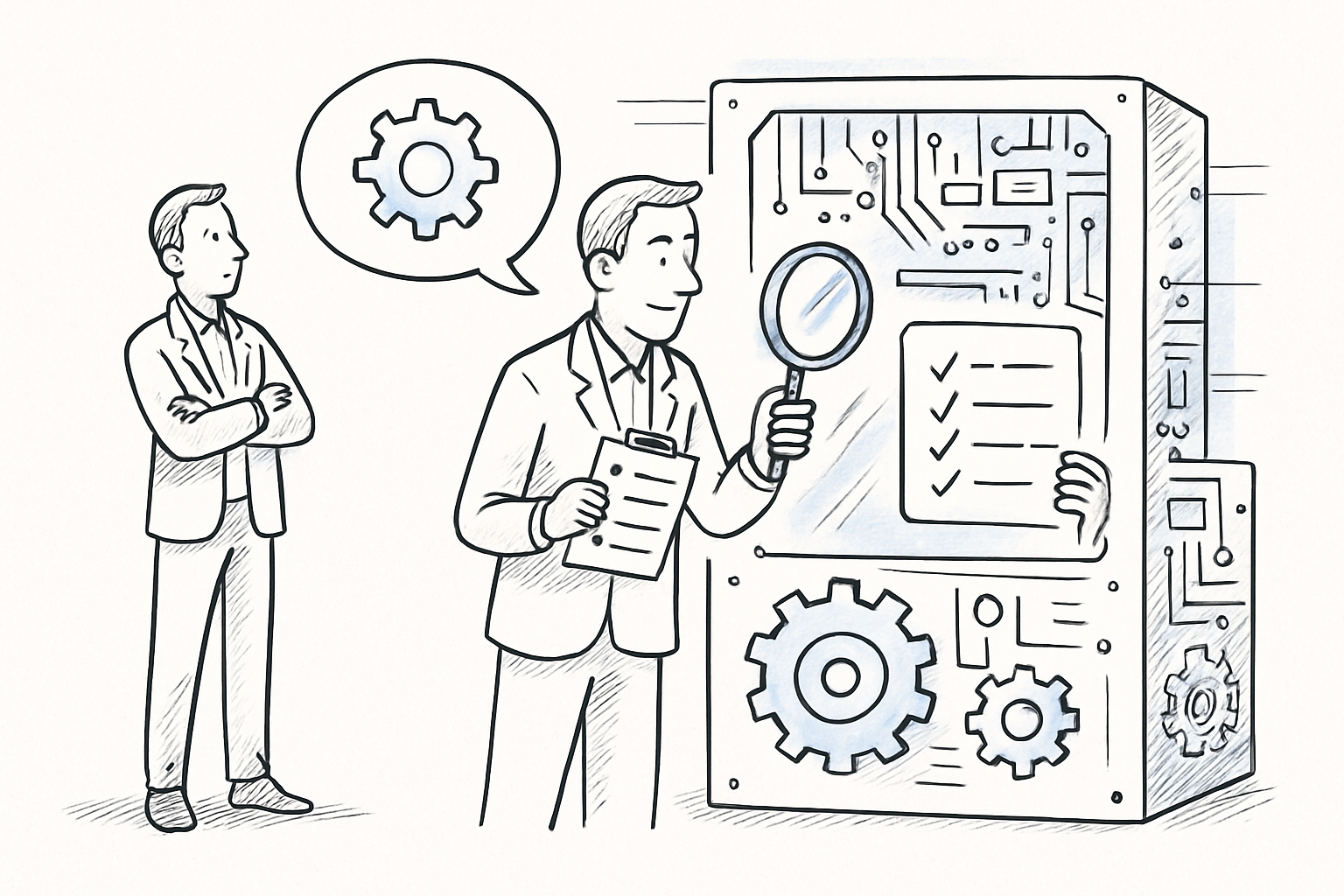
Let me be clear up front: this is not about founders needing to know how to code.
Plenty of great founders can't write a single line. The problem isn't the inability to build — it's the absence of a framework to judge the build. Those two are completely different.
The Real Costs of Not Understanding Development
Over 18 years watching from the side, here's what non-technical founders repeatedly pay for:
- They take "it's almost done" at face value. With no way to verify progress, they judge by the visible screen — and problems pile up at the end.
- They assume expensive means good (and the reverse). Unable to question the basis of a quote, they decide on the number alone.
- They don't feel the weight of "just add one thing." It looks like one button, but they can't tell when it actually means restructuring.
- They get locked in. Without checking how the code is managed or whether they actually own it, they can't move to another vendor later.
This isn't the founder's fault. Nobody told them.
You Don't Need to Become a Developer
The good news: none of the above requires coding skill to avoid. What it requires is the ability to ask the right questions and a minimum framework for judgment.
The Minimum to Know
1. Ask about progress as "usable scope," not screens. Instead of "is it almost done?", ask "what actually works end to end right now?" A screen loading and a feature being usable are not the same thing.
2. Demand the basis of a quote. Don't look at the total alone — ask "what work adds up to this number?" A quote that can't be explained is a risk. A vendor who can explain it is trustworthy.
3. See the work in progress, often. Don't wait until it's finished. Ask for something you can actually touch every 2–3 weeks. Catching a wrong direction early is the biggest cost saving there is.
4. Nail down code ownership and handoff up front. Before signing, confirm: "Do I own the deliverables — code, accounts, data?" and "Can I hand this to another team later?" Skip this and you get locked in.
5. Be wary of the word "simple." Truly simple things are rarer than they look in software. Even when a request seems simple, asking "how much does this affect the schedule?" once cuts down on mutual misunderstanding.
What You Really Need Is a Partner Who Translates
Honestly, staying on top of all five every time isn't easy either. Which is why what matters more is finding a partner who explains development in the founder's language.
A good development partner doesn't try to turn you into a developer. They lay out the reasoning so you can make the call. One partner like that covers all five of the above for you.
Not understanding development is not a flaw. But handing the whole thing over with no framework costs you. You don't need to learn to code. Knowing how to ask, and how to choose a partner who explains, is enough. If you're weighing an MVP build, I'd be glad to talk it through at mvpit.dev.
Get notified of new posts
We'll email you when a new blog post is published.