Four VC Mentoring Sessions, Two Months — The Time I Dropped What I Was Building
Over two months in Korea's 'Modoo Startup Project' round 1, I got four 1:1 mentoring sessions with a VC investment associate — and dropped the direction I was preparing along the way. Here's what I learned.
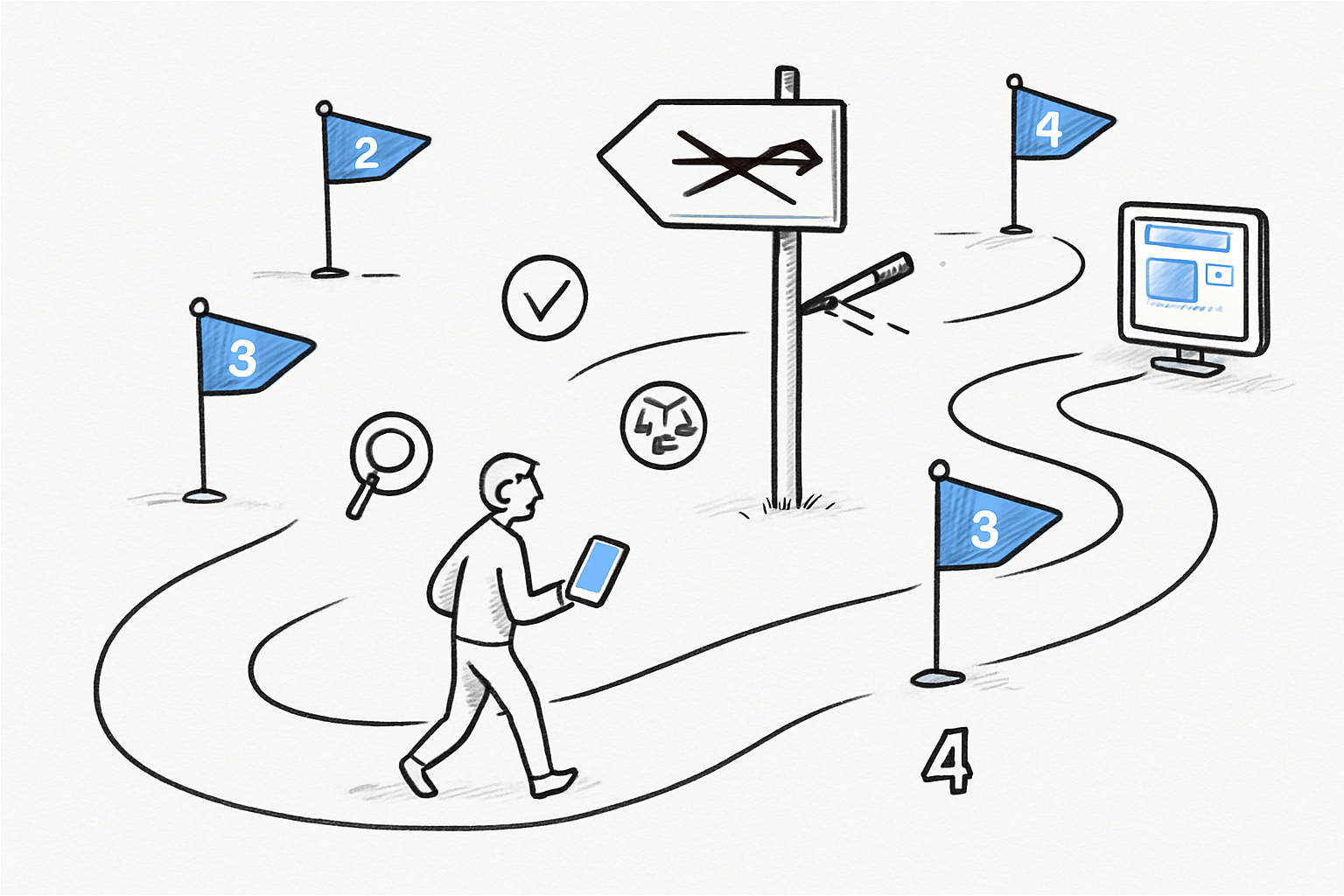
I was selected for round 1 of Korea's "Modoo Startup Project" (a government-backed early-stage program), and over June through August I received four 1:1 mentoring sessions with a VC investment associate. I finished the last session today.
Looking back, these four sessions weren't a place to get confirmation that I was "doing fine." They were where I dropped the direction I was preparing and rebuilt it. I'm writing this without hiding that part.
Session 1 — I went in without confidence
I went into the first session genuinely unsure whether the idea I was preparing was even viable, and I didn't know where to start with market research. I said so up front.
The mentor gave me a concrete list of what to research, and by the end of that conversation I had a direction.
Session 2 — I dropped what I was preparing
I came back with that research organized. This time the feedback was that my preparation on business viability was insufficient. I dropped the direction right there in the room.
One question has stayed with me since:
"You need to know why they aren't doing it."
A market with no visible competition isn't necessarily an opportunity — it's often a sign someone already tried and found a reason it doesn't work. If I couldn't answer that question, what I had wasn't a business idea. It was just an idea.
Session 3 — I brought a working demo instead of a deck
Up to that point I'd been trying to explain with materials — a one-page product intro. This time I built something that actually worked and brought that instead. The result was a completely different quality of conversation. Things I'd been explaining in words became instantly checkable on a screen, which let the mentor ask sharper questions and let me give more precise answers.
That was the first time I really felt the difference between trying to persuade with a document and just showing the real thing.
Session 4 — I came back with answers
For the last session, I reported back with actual evidence addressing the question raised in session 2. Some of what I was told this round is worth keeping regardless of the specific idea:
- A subjective opinion is not a fact. Hearing "this is good" from someone you know isn't validation.
- Validation comes down to two things: completeness and market response — and depth matters more than headcount.
- Checking whether competitors are actually working — actively operating, not just listed — is evidence of market viability and response.
- The effort put into improving the product is itself evidence.
- Pricing should be set from your own survival and finances, not from competitors' listed prices.
- Competitor analysis should be quantitative.
- Fact-based sources, like official statistics, are the evidence to lean on.
A bonus lesson — don't trust an AI's number just because it came fast
To size the market, I asked three different AI research tools the same question about market size. The answers came back as roughly 21.3 trillion won, 120 billion won, and 2–5 trillion won from our own research — a gap of up to 180x on the exact same question.
If three tools give wildly different answers to the identical question, none of those numbers is evidence. So we decided not to put any AI-generated market size estimate into the business plan as-is. It's a concrete case of "don't trust a number just because an AI produced it," worth keeping on record.
Mistakes developers and founders commonly make
Looking back at two months, I can see the mistakes I was making at the start.
- Trying to explain with materials. If you can build it, building and showing it is faster.
- Treating friendly reactions as validation. A favorable response from people you know is not a market response.
- Setting price by looking only at competitors. Your own survival and financial structure comes first.
Dropping the direction I was preparing wasn't something to be embarrassed about — I think it's actually why this project kept moving forward. The round 2 results aren't out yet, but what I learned across these four sessions will stay useful regardless of the outcome.
Get notified of new posts
We'll email you when a new blog post is published.