Korea's Modoo Startup Round 2 — What Changed for Round 1 Rejects
Korea's Modoo Startup Round 2 launches in early July. Double the spots, re-challenge support, and a new global league — here's what changed for the 57,000 who didn't make Round 1.
Bottom Line
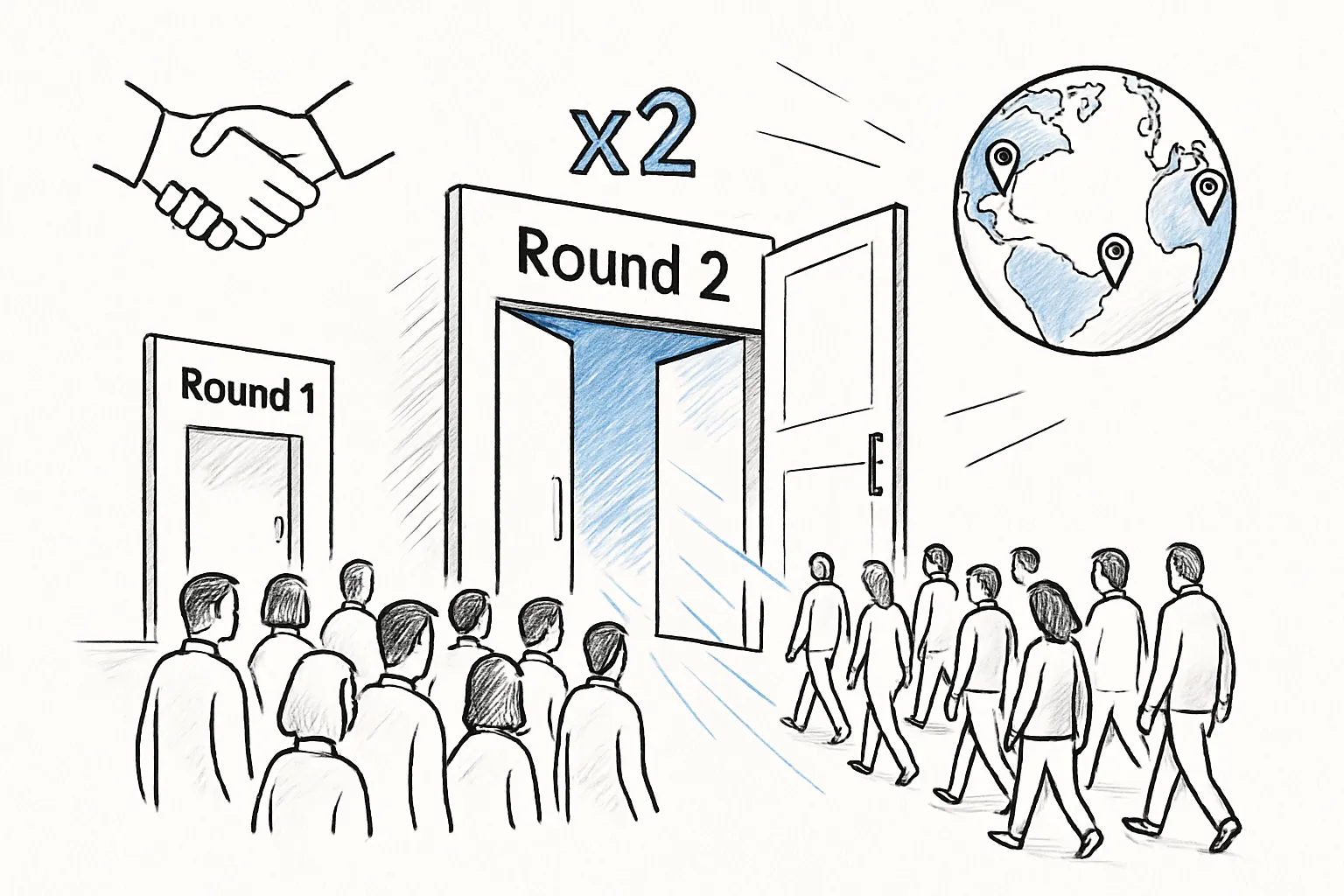
Korea's Modoo Startup Round 2 launches in early July. The government is providing re-challenge mentoring to the 57,000 who weren't selected in Round 1 and will give preference to those who complete it. The number of spots doubles from 5,000 to 10,000.
Here's what changed, based on the official announcement made on May 22 at the Economic Ministers' Meeting.
Round 1 vs Round 2 — What's Different
| Round 1 | Round 2 | |
|---|---|---|
| Spots | 5,000 | 10,000 |
| Operating organizations | ~100 | ~200 |
| Re-startup eligibility | Within 3 years | Within 7 years |
| Application period | April–May | Early July |
| Support for rejects | None | Re-challenge mentoring + evaluation preference |
| Leagues | General/Tech, Local | General/Tech, Local, University, Global |
In Round 1, the competition ratio was 12.6:1. If Round 2 draws a similar applicant pool, doubling the spots brings the ratio close to half.
Re-challenge Mentoring — An Official Program for Rejects
The government is providing direct re-challenge support for the 57,000 Round 1 rejects.
What's included:
- Feedback on your original idea submission
- Online mentoring
- Offline mentoring in all 17 provinces/cities
The key point: Completing the re-challenge mentoring and refining your idea will count as a positive factor in Round 2 evaluation. Simply resubmitting your Round 1 application won't carry the same weight as showing a documented improvement process.
Specific enrollment details and timelines haven't been released yet. Check the Modoo Startup platform for updates.
New Leagues Added
Round 2 introduces three new leagues beyond the original General/Tech and Local tracks.
University League
Open to university startup teams during summer break. If you're a student founder, applying through this league may give you a more favorable competitive landscape.
Youth Startup Camp
For elementary through high school students. This appears focused on startup exposure rather than direct commercialization.
Global League
Held on-site in the US (Silicon Valley), Singapore, and India. Worth paying attention to if you're targeting international markets.
Round 1 Process Details Are Now Public
To prepare for Round 2, it helps to understand the full process Round 1 participants go through. This was revealed in the latest announcement.
| Stage | Timing | People | Support |
|---|---|---|---|
| Idea screening | Mid-June | 5,000 | KRW 2M activity fund + 406 AI solutions |
| Initial mentoring | June–Aug | 5,000 | Assigned mentor, minimum 4 sessions |
| Regional audition | ~August | 1,100 | Up to KRW 20M commercialization fund |
| National competition | H2 | 200 | KRW 50B startup fund, up to KRW 100M follow-on |
Even though 5,000 are selected initially, the funnel narrows to 200 at the final stage. Getting selected in Round 2 — even with 10,000 spots — is the beginning, not the end.
Preparing for Round 2 — What You Can Do Now
You have roughly 5 weeks until Round 2 opens. The two most effective things you can do with that time:
1. Join the Re-challenge Mentoring
Your participation history will be weighted in Round 2 evaluation. When enrollment opens, sign up immediately. The documented record of receiving feedback and revising your idea directly translates into evaluation credit.
2. Build a Working Prototype Before Applying
62,944 people applied for Round 1. The vast majority submitted ideas on paper. The most reliable way to stand out in Round 2 is to show a product that already works.
An MVP isn't a finished product. It just needs one core feature working. $1,500–$4,000 gets you there, no government funding required. We broke down the specifics in a previous post.
If you're not sure about scope and cost, try our free MVP diagnosis — enter your idea and get a module-by-module cost breakdown instantly.
Wrapping Up
Getting rejected from a 12.6:1 competition doesn't mean your idea was bad. Round 2 doubles the spots, favors re-challengers, and doubles the number of supporting organizations. The odds are materially better.
But better odds also mean more applicants. What ultimately makes the difference is a documented improvement process through mentoring and a working prototype you've already built. The next 5 weeks are your window to create that edge.
Related: Passed the Idea Round of Korea's Largest Startup Competition — What We Submitted and Learned
Related: You Didn't Win the Startup Contest — Here's Why You Should Still Build Your MVP
Get notified of new posts
We'll email you when a new blog post is published.