
How Projects Die Without a PM — And Why a Solo Company Is Missing More Than That
Projects without a PM don't fail from laziness. They collapse because nobody forces a decision and nothing that's stalled is visible. The collapse order I've seen for 18 years — and the same thing happening to solo operators.
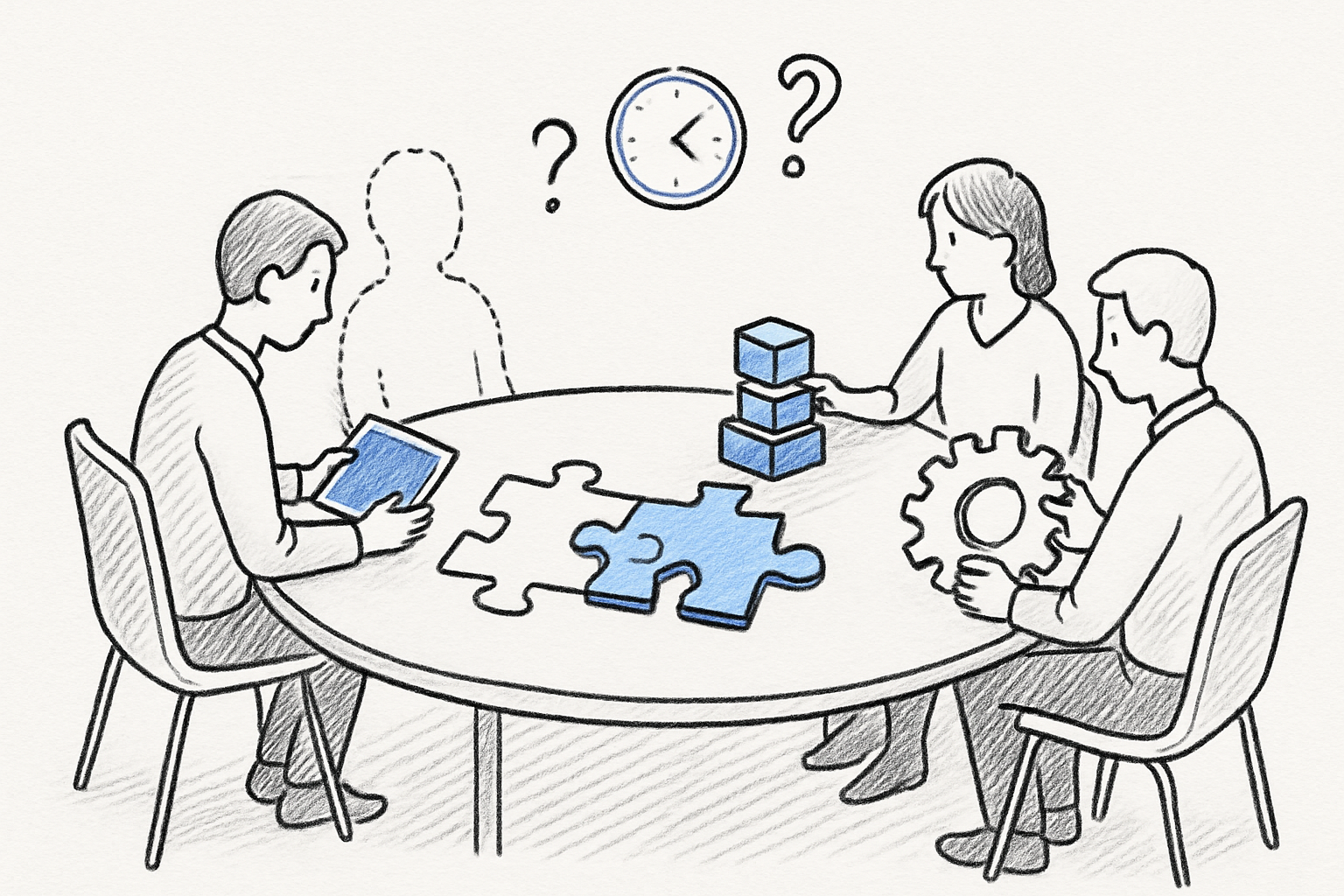
How does a project without a PM end?
Not with an explosion. Quietly, in a predictable order. Over 18 years across a lot of teams, I've watched almost exactly the same sequence play out.
The collapse always follows the same order
Stage 1 — Nobody says "we're not doing that." A request comes in, and everyone answers from their own seat: "sure, that's possible." They're not wrong. But nobody is looking at the whole and saying "if we add that, what comes out?" So nothing ever comes out. Things only get added.
Stage 2 — Every piece is individually correct. Design is right on its own terms, the backend is right on its own terms, the app is right on its own terms. Put the three together and they don't line up. Because no individual piece was wrong, this problem doesn't exist until the moment you connect them.
Stage 3 — Nothing that's stalled is visible. This is the expensive one. Someone waits three days for an answer, and those three days get recorded nowhere. "In progress" can mean actively working or blocked and waiting, and nothing distinguishes the two.
Stage 4 — Everything piles up at the end. And that's when someone says the schedule slipped. But what slipped wasn't the last week. It was the accumulation of all those three-day gaps nobody was watching.
A PM's job isn't schedule management
Reading that sequence backwards shows you what the PM was actually preventing. It was never about drawing a pretty timeline.
- Forcing decisions. Making a deferred decision get closed today.
- Surfacing what's stalled. Turning "in progress" into "waiting on X."
- Holding the whole. Finding where individually-correct pieces will fail to meet.
So a project without a PM doesn't fail from laziness. It fails while everyone works diligently, because nobody owns those three things. The empty seat itself is the cause.
But run a company alone, and the PM seat isn't the only empty one
That's all about projects with a team. These days, though, I see the same structure far more often somewhere else: solo and very small operators.
Run a company alone and it's not just the PM that's missing. There's nobody watching operations, nobody tracking money and deadlines, nobody owning outreach. We usually say "the founder wears all the hats," but honestly, they aren't being worn — they're empty. Wearing multiple hats implies splitting time between them. What actually happens is that the single most urgent thing gets handled and the rest of the seats simply sit unoccupied.
The symptoms match the project version exactly. Decisions get deferred with nobody pushing back, work sits stalled for weeks with nobody flagging it, deadlines get noticed only after they pass. Working alone doesn't collapse less — you just find out later, because there's nobody there to tell you.
When you can't add people, how do you fill the seat?
In my last post I wrote that even running many things in parallel with AI, you eventually need people. Which leaves the question: what do you do while you can't add any?
Here's the answer I've landed on. Filling a role isn't the same thing as hiring a person. Two of the three jobs above aren't judgment at all — they're detection.
- Surfacing what's stalled — a rule can do this. How many days something hasn't moved requires no human to notice.
- Not missing a deadline — a rule can do this too. Dates don't need judgment.
- And deciding — this stays human, permanently. What to give up cannot be delegated.
What actually eats a solo operator alive isn't the third one; it's the first two. The decision itself takes minutes. Discovering that a decision was waiting takes weeks. Hand that discovery to a system, and the seat that's left can be filled by one person.
Projects without a PM fail from an empty seat, not from incompetence. Running a company alone works the same way. The trap is assuming every empty seat has to be filled by a person — because then, for as long as you can't hire, there's no move available.
Hand off the detection. Keep the decision. That's the answer I've found so far.
Get notified of new posts
We'll email you when a new blog post is published.