
Bringing AI to Repetitive Work: Decide Where Each Task Goes
To bring AI into work people repeat every day, first decide for each task whether to use an existing tool, adopt a SaaS product, or build something new. Here is how a company without a dev team sets that order.
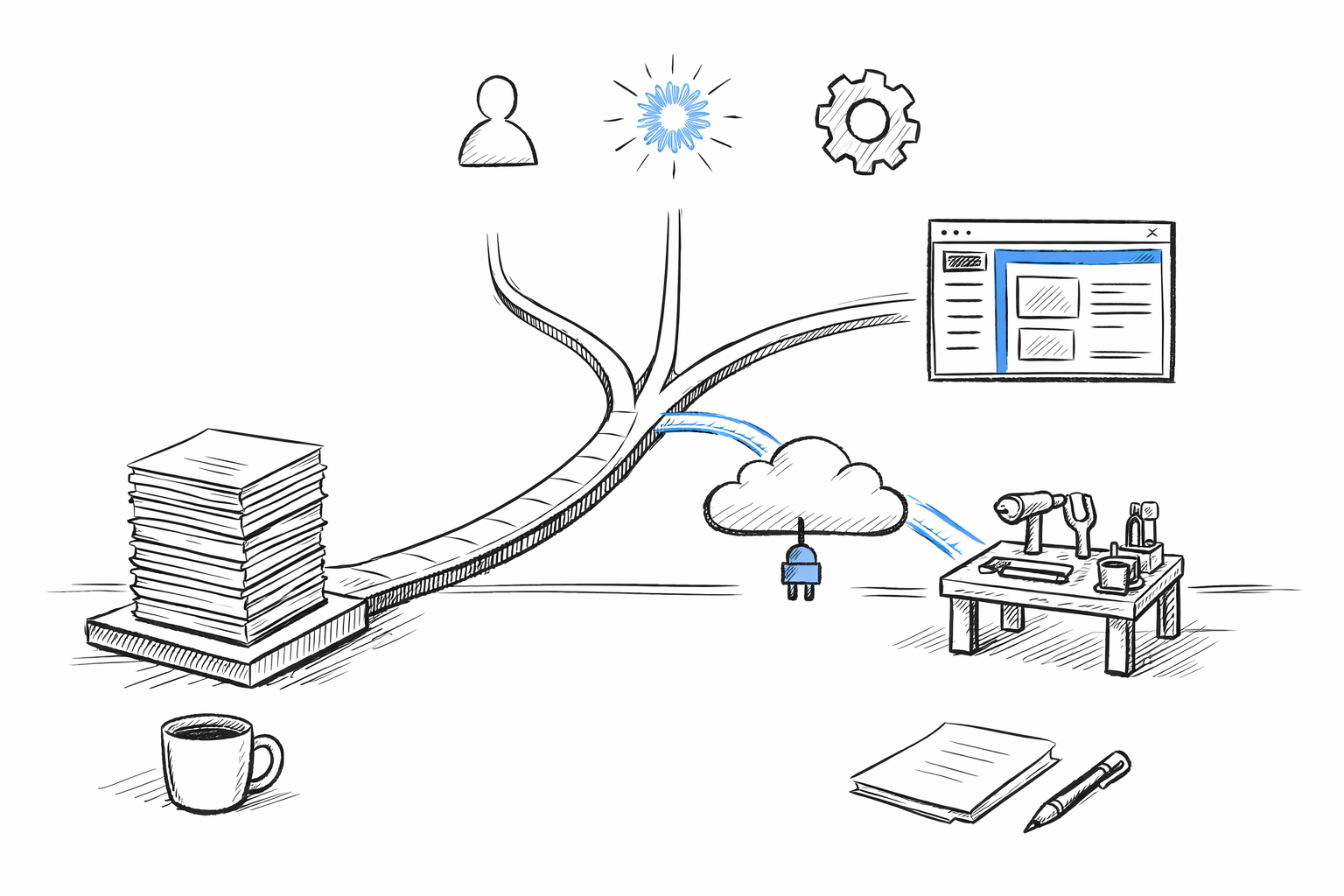
When you bring AI into repetitive work, decide where each task goes before you pick any tools. There are three places it can go: handle it with a tool you already use, adopt a SaaS product that fits, or build something new for your company.
Skip that step and add tools first, and you end up with more accounts while the manual work stays exactly where it was.
What does the operations track decide?
The operations track is MVPIT's AI Advisory program for companies without a development team. As described on /advisory as of October 2026, it looks at workflows and repetitive tasks and decides, for each task, whether to use an existing tool, adopt a SaaS product, or build something new.
Companies that need it usually share the same concerns. They know they should use AI but not where to start, they want to cut the work people repeat by hand every day, and there is no one inside who can look at the technology and make the call.
Where should repetitive work go?
Each repetitive task has to be looked at on its own. Even within one department, one task can be solved by a feature in a tool you already have, while another only gets solved by building something.
The questions to ask are simple.
- Does a tool we already use have this feature, and we just aren't using it?
- Is there a SaaS product that already does this, without forcing a very different way of working?
- Is this our own way of doing things, hard to fit into off-the-shelf tools?
If the first two questions give an answer, there is no reason to build. Only tasks that fall under the last question go toward building. At the same time, decide whether each task stays with a person, goes to AI, or runs automatically.
Can a company without a dev team get AI Advisory?
Yes. The operations track exists for exactly that kind of company. It starts by looking at how work flows and which tools are in use, so not having developers in house is no obstacle.
Where does it start?
In the first week we visit, listen to the people doing the work, and watch how it gets done. The first result is a ranked list of tasks worth using AI for. After that we decide together what to change and what to keep, settle tools, security, and cost, and finally define the metrics and the first pilot.
You can see the three-week process for deciding where each repetitive task goes on the AI Advisory page.
Get notified of new posts
We'll email you when a new blog post is published.